Showing posts with label IIPM INDIA. Show all posts

Wednesday, January 20, 2010

Once bitten, twice shy!

Invariable issuance of pink slips has been a norm amongst companies over the last one year – well, to beat the downturn blues. But, not all have been successful in implementing the same. Naresh Goyal’s Jet Airways, in October last year, was forced to take back 1,900 employees after it faced wrath and protests across the country. But, this private airline has once again unveiled its plans to cut down the extra flab in its workforce (by 2,000 employees) to save cost and stem its bleeding bottomline. But, then the real question arises too – Will it succeed in terminating the jobs this time or will it be forced to eat the humble pie once again? Certainly, with an aircraft to employee ratio of 1:145, the total manpower of Jet Airways currently stands at 12,000 and as such it’s planning to bring it to 10,000. “Streamlining the number of employees and capacity cut is imperative for Jet Airways to stem its current losses,” agrees Hatim Broachwala, aviation analyst, Khandwala Securities. However, learnt his lesson from the last fiasco, Goyal is strategically implementing the job cuts in various phases this time. Jet Airways, which pocketed a heartrending Rs.225 crore loss in Q1 FY 2009-10, is certainly cautious enough this time to not to go for a mass retrenchment. More importantly the airline is rightsizing the number of personnel in various verticals this time rather than churning out people from just one department. In fact, the process of issuing pink slips has already started in the company as 50 employees were off loaded last week. So, with this slow and steady approach (and without much noise), it seems that Jet might succeed in its endeavour without much fuss this time.

For more articles, Click on IIPM Article.

Source : IIPM Editorial, 2010.

An Initiative of IIPM, Malay Chaudhuri and Arindam chaudhuri (Renowned Management Guru and Economist).

For More IIPM Info, Visit below mentioned IIPM articles.
Follow Arindam Chaudhuri on Twitter
1 lakh copies sold in less than 10 days of Arindam Chaudhuri’s “Discover The Diamond In you”
IIPM fights meltdown, places 2300 students By Education Mail Bureau
Delhi/ NCR B- Schools get better By Swati Sharma
Events at IIPM
Detail of all IIPM branches
IIPM set to beat economic slowdown
IIPM - Admission Procedure
IIPM, GURGAON


Friday, January 15, 2010

Of booms and busts...

Affordable housing has come as relief for the Indian realty sector. But, does it really need another boom?

The real estate sector seems to be on a recovery track as sales of housing and residential properties have started picking up, thanks to the concept of affordable housing. But what really is affordable housing? Affordable housing was perceived to be as property in the range of Rs.20-30 lakh and affordable to the mid-income group. Apart from clearing the myth of affordable housing, Kumar Gera, Chairman and Santosh Rungta, President – CREDAI (Confederation of Real Estate Developer’s Association of India), reason why there should not be another boom in the real estate sector.

4Ps B&M: What exactly is the concept of affordable housing?
SR:
Generally speaking, affordability is linked with houses being cheap. But it’s different from the common myth. For various levels of income group, the affordability is different. A person who is earning Rs.2,000-3,000 per month also needs a house and that should be affordable to him. Affordability is dependant upon the earning capacity of an individual. The right interpretation of the word affordability means to be in a situation to provide a product, which is affordable to each section of the society – low-income group (LIG), mid-income group (MIG), economically weaker segments (EWS) as well as the high-income group (HIG).

4Ps B&M: But, why did prices bloat in the first place?
SR:
Price is always the mechanism of demand and supply. For developers, 30-40% of the component of price is that of the cost of the land. As cities grow, cost of land increases, and therefore cost of apartments also increases.

KG: In addition to that, input costs, material costs, steel, cement, labour cost, development charges as levied by local authorities, cost of power, et al, have sky-rocketed. Price is in fact a function of all these factors.

4Ps B&M: What issues are you discussing with the government to develop affordable housing?
SR:
First of all there are land issues. Government has some land and we’re discussing how that land can be converted into housing. Then, some states still continue with the Urban Land Ceiling Act that needs to be immediately removed. There is also a question of land convertibility of agricultural land into housing land. The second most important issue is the creation of infrastructure. The land is expensive in the main cities and therefore we’ve to look at the suburban land. And for that there should be a good transportation network as every person living there needs to come to city to work. Roads are not laid out, so there has to be a policy on roads as well. Then it should also be known in which direction is the town moving, for which a masterplan has to be made and pockets have to be identified.

4Ps B&M: Region wise how is the sector performing?
KG:
Pretty much the same. Areas which are IT centric may be suffering more than areas which have their economies based on certain other sectors that are more stable. In fact, real estate certainly depends upon the economy of a particular region to a marked extent.

4Ps B&M: So, when do you foresee the next real estate boom?
SR:
I’ve been in this business for the last 40 years and I don’t want any boom in the sector. It is not in the interest of the sector. Our ideal dream is to move with the economy and let there not be a situation where real estate moves ahead of the economy. We don’t want prices to rise suddenly but to move progressively in line with the growth of the GDP.

KG: Sector will move up as input costs will increase and there will be a reasonable price increase, which people can accept. If prices go up, profit margins will go up, but then how many units will be sold? Volumes will go down, which will bring down the sector. So, there should always remain a healthy demand at price points.

Savreen Gadhoke

For more articles, Click on IIPM Article.

Source : IIPM Editorial, 2010.

An Initiative of IIPM, Malay Chaudhuri and Arindam chaudhuri (Renowned Management Guru and Economist).

For More IIPM Info, Visit below mentioned IIPM articles.
1 lakh copies sold in less than 10 days of Arindam Chaudhuri’s “Discover The Diamond In you”
IIPM fights meltdown, places 2300 students By Education Mail Bureau
Delhi/ NCR B- Schools get better By Swati Sharma
Events at IIPM
Detail of all IIPM branches
IIPM set to beat economic slowdown
IIPM - Admission Procedure
IIPM, GURGAON

Wednesday, June 18, 2008

HINDUSTAN TIMES

A decade ago, Home TV had demonstrated that HT will leave no stone unturned to strengthen its brand portfolio!

ThoseHINDUSTAN TIMES were the days when K. K. Birla was at the helm of the Hindustan Times... the Group carried a different image and a different legacy. Times changed dramatically when Shobhana Bhartia took charge and brought Vir Sanghvi on the floor. The brand gradually acquired a more youthful image. Over the last year specifically, the brand took a slew of initiatives to sustain its position in the Indian market, the most talked about among them being the launch of its daily business tabloid – Mint – earlier this year. “Looking at India’s upbeat economy, we realized that there is a very glaring opportunity of being a strong number 2 in this category (number 1 being Economic Times), as 65% of the market share is under ET’s control,” avers Ranjan Bhalla, Publisher of Mint. Just a few days later, HT also launched a daily tabloid – Metro Now – in cahoots with arch rival, The Times of India. Though startling for many, this joint venture is a strategical step forward for the brand. Moreover, the launch of an edition in Mumbai in 2005 has considerably increased HT’s national footprint. But times are changing now. Vir Sanghvi has now said goodbye to Hindustan Times and is headed to partner with Peter Mukerjea of Star Network to launch a TV news channel. Will his exit have an impact on the HT Media conglomerate?

For Complete IIPM Article, Click on IIPM Article

Source :
IIPM Editorial, 2008

An
IIPM and Professor Arindam Chaudhuri (Renowned Management Guru and Economist) Initiative

For More IIPM Info, Visit Below....
IIPM - Admission Procedure
IIPM is A World of Career
IIPM, GURGAON
Relying on Mukesh
He Ain’t No Virgin
The Next Media Czar!
Lux - Surat bhi hai khoobsurat bhi hai
Home is where the heart is?

Friday, May 23, 2008

Riding the realty wave!


IIPM - Admission Procedure

Here’s your pass to the party...

Many gaped in awe at the newspaper headline which read that Connaught Place has now jostled its way to the top ten list, as the seventh most expensive office centre in the world, just behind Nariman Point, Mumbai. Great stuff, but the retail investor has almost always been left out of the real estate party, even as prices continue to cross one milestone after another. The reason is simple; most investors feel handicapped when it comes to real estate investments because of huge capital requirements. But there are affordable ways too...

Of course, there is the most-popular stock market route, wherein one can invest in existing listed stocks like that of Unitech and Parsvanath, which are currently hovering much below their peak. Then there are also upcoming IPOs like that of DLF which would definitely feature on the investor’s radar, yet rest assured that there are better times ahead. But, in the offing are a few more ways that’ll allow investors to drop in and ride the real estate wave.

The new investment options to soon become available to the retail investor are Real Estate Mutual Funds and Real Estate Investment Trusts (REIT). While the option of investing via Mutual Funds will allow investors to reap the returns of a real estate boom, in a relatively secure way, and under professional guidance; Real Estate Investment Trusts – publicly traded Trusts making investments in real estate assets – may also soon become a reality option to exercise.

Says Ashwin Ramesh, Co-founder, Primary Real Estate Advisors, “Mutual funds and REITs are the safest route for an investor to get an exposure in real estate. Even though both the options are not available for the Indian retail investor presently, the SEBI is working towards it and soon we may see retail investor participation in both these avenues.”

Edit bureau: Bikram Keshari Jena

For Complete IIPM Article, Click on IIPM Article

Source :
IIPM Editorial, 2008

An
IIPM and Professor Arindam Chaudhuri (Renowned Management Guru and Economist) Initiative

For More IIPM Info, Visit Below....
IIPM - Admission Procedure
Why Study Abroad When IIPM Gives You 3 global Advantages!
The Sunday Indian - India's Greatest News weekly
IIPM, ADMISSIONS FOR NEW DELHI & GURGAON BRANCHES
IIPM, GURGAON
ARINDAM CHAUDHURI’S 4 REASONS WHY YOU SHOULD CHOOSE IIPM...
IIPM Economy Review

Friday, May 09, 2008

Are you ‘triskaidekaphobic’?


IIPM - Admission Procedure

...we mean, should Ranbaxy fear No.13?

‘India Inc. going global’ no more sounds astounding! And why should it, when on one hand India Inc. is firing all RANBAXYcylinders, on the other, foreign money is flowing in like it never did! And so it has increased the appetite of hungry-forpower India Inc., which after shelling out a monumental $24.3 billion in buying out foreign companies during the first four months of 2007 alone is scouting greedily for more! Look at Ranbaxy which gobbled-up 13 skin-care brands from the stable of the renowned American pharmaceutical major Bristol-Myers Squibb (BMS) on May 28, 2007 at one go. While speaking on the deal, a Ranbaxy spokesperson told 4Ps B&M, “The acquisition will strengthen our dermatology range. Earlier we had one product but now we will have a wider range with a greater market penetration capability. Currently our plans are to market the products in high margin markets like USA, with no plans for India yet.”

The acquisition is believed to have stemmed from Ranbaxy’s long term strategy of product portfolio expansion to garner a larger pie of the lucrative market of dermatology products. Renowned for its cost effective distribution channels, the acquisition is sure to propel Ranbaxy’s brand potential ahead, from the doldrums it seems to been in off late. It is estimated that the combined market value of the brands is close to $4.5 billion with sales hovering around $15 million.

However, Ranbaxy despite having paid a ‘lower than valued’ amount has to watch out as ‘all’ 13 brands come under the purlieu of ‘branded generic drugs’ – simply meaning that they either have already lost or will lose their patent shortly and then can be manufactured and marketed by all generic manufacturers. Hence, while the deal gives Ranbaxy a chance to get stronger in the dermatology drug market, it may have just placed its bet on a winning horse which has now gotten old! 4Ps

Edit bureau:
Karan Mehrishi

For Complete IIPM Article, Click on IIPM Article

Source :
IIPM Editorial, 2008

An
IIPM and Professor Arindam Chaudhuri (Renowned Management Guru and Economist) Initiative

For More IIPM Info, Visit Below....

Tuesday, April 08, 2008

When brawn matters!


IIPM, ADMISSIONS FOR NEW DELHI & GURGAON BRANCHES

Bullet Electra stands for power and poise alike


“It’s a Brand Performancedifferent animal, a majestic model with a classic style...” is how Bullet aficionados define the Electra. And we all agree... for this brand from the stable of Royal Enfield has often been referred to as the two - wheeled leader on Indian roads when it comes to leisure and power. Shaji Koshy, Head-Sales and Marketing, Royal Enfield explains the bike’s success. “It is packed with enhanced comfort, styling and performance features to deliver a unique motorcycling experience. Increase in dealer network, easier finance options and community building has helped Royal Enfield to reign,” he avers. The bike comes with a 350cc high performance, 4 stroke engine with unmatched stability through wider tyres and longer wheel base. Bullet Electra stands for power and poise alikeThese technical advantages are complemented with a range of stunning colours, amber lens trafficators, 3D graphics and white dial backlit speedometer making the Bullet Electra a real show-stopper. The advertisement campaign with the punchline – ‘Everybody makes way for the Bullet’ worked wonders for the image of the mean machine and the company’s other promotions like adventure treks and biking events have constantly enhanced its stature. This Bullet Electra keeps the adrenaline rushing both for bike lovers and the company. It accounts for 50% of the company’s total business!

For Complete IIPM Article, Click on IIPM Article

Source :
IIPM Editorial, 2008

An
IIPM and Professor Arindam Chaudhuri (Renowned Management Guru and Economist) Initiative

For More IIPM Info, Visit Below....
Why Study Abroad When IIPM Gives You 3 global Advantages!
The Sunday Indian - India's Greatest News weekly
IIPM, GURGAON
ARINDAM CHAUDHURI’S 4 REASONS WHY YOU SHOULD CHOOSE IIPM...
IIPM Economy Review

Wednesday, April 02, 2008

15 Dream Machines


Why Study Abroad When IIPM Gives You 3 global Advantages!

Indian (auto)motives?!?

The Who loves the passengers‘my car is better than yours’ dilemma has been a psychological ailment in Western societies for long, so much so that it has almost taken epically disturbing dimensions lately. Neighbours around the world have been willingly part of this battle and it appears that there is no way out of this situation. Even though this was a strictly ‘developed country’ phenomenon, where citizens had cornucopic car choices, there was a very interesting fact to it. The uneasiness inducing cleft stick acted as a virtual yardstick between the haves and the have nots of the world. A perpetual differentiation between those who could not only afford personal transportation but also think of jealousy at that and those who could not even think of such amenities in the first place, leave alone choose! With only 7 cars per 1,000 persons, Indians as a matter of fact found themselves in the latter group of forsaken souls. A difference which is so blindingly glaring that humanity’s disparities become ever so obvious, so painful. Now however, things are changing and at a very rapid rate at that!

Suddenly this so called Western phenomenon is finding its way into Indian societies as well! Post-1992, there have been so many cars making space in the Indian market place, that harbouring a grudge against your neighbour’s car has indeed become a reality. Today India is the world’s twelfth-largest consumer market, with the fourth highest Purchasing Power Parity in the world! It is destined to become the number three car market by 2018 with just the big markets like the US, Japan and China ahead of it. Major players like BMW, DaimlerChrysler, Ford, Honda and Toyota are already present & are planning bigger investments in the country. According to SIAM, close to 275,147 passenger cars were sold in April-June 2007-08 alone. Recording a year-on-year growth of 12.6% on an average, the Indian car industry is all set to fulfill Indian dreams. Even though the compact segment is the largest contributor in the statistics here, the growth distribution is evenly matched in all the segments. Looking at the present year-to-date picture, India can boast of some of the best known brands which roll out of the four-wheeler assembly lines.

So while two decades back, all that Indians could think of in the name of a four-wheeler was a rugged Fiat or the coughing Ambassador from the stable of Hindustan Motors, today, one can easily spot a striking red Lambhorgini Murcielago or a dashing black Audi parked outside malls and residential colonies alike, in major cities across India – all thanks to liberalization & growing per-capita income fuelled by the excellent economic growth!

AsTwo-wheeled dreams... far as the two-wheelers are concerned, there is a deep-rooted relationship between us and them! The two-wheeler has proved a great comforter at a time of distress for us Indians. It acted as ‘safety valve’ and provided some solace when all that an Indian could afford was a prehistoric leviathan on two wheels (that too after a great deal of patience!). From a time when domestic two wheeler production touched a pathetic sub-2000 units annually to today, a time where close to 1,800,000 units are sold in a matter of months, there have occurred massive changes in the general consumption patterns of the nation. The sheer aspiration of Indians and their willingness to climb up the value chain has been nothing short of phenomenal! The 150cc scooter has given way to motorcycles.

These sleek machines have brought about a paradigm shift in the nations thinking and have simply revolutionised the way Indians perceive(d) transportation – all only proving why the two-wheeler will still not be rendered obsolete as a ‘family vehicle’ for a long long time to come!

For Complete IIPM Article, Click on IIPM Article

Source :
IIPM Editorial, 2008

An
IIPM and Professor Arindam Chaudhuri (Renowned Management Guru and Economist) Initiative

For More IIPM Info, Visit Below....

Monday, March 24, 2008

Of Bubli and Bubbaloo


Why Study Abroad When IIPM Gives You 3 global Advantages!

‘Kuch Kuch meetha ho jaye’meetha ho jaye’ and Big B: the duo became the magic wand that successfully converted Indian tastes for the traditional mithai into chocolates. And now, Cadbury has boldly ventured into the bubble-gum space with ‘Bubbaloo’ and with similar panache, hopes to strengthen its confectionery portfolio. The chocolate major already has a strong presence in the candy space with ‘Éclairs’; and in the mint space with ‘Halls’. Bubbaloo’ will close the gap for Cadbury, allowing it to reap rewards in the Rs. 180 crore Indian bubble-gum market. The company aspires to seize about 10% share into its basket.

According to the Marketing Director, Cadbury India, Sanjay Purohit, “India is one of the fastest growing gum markets in the world and we see massive potential for Bubbaloo. The move will significantly contribute to enhance our leadership position in the category.” In India, Bubbaloo (already a dominant global brand present in 25 countries) will see a focused 360 degree marketing campaign in order to reach out to consumers. The campaign will be anchored by Bubba – the cat, the brand mascot. Cadbury is also keen to initiate various programmes and on ground activities to engage consumers. Adds Purohit, “We are looking to achieve double-digit market share in 18-24 months which will contribute to 5% of our total business.” With competitors like Boomer and Big Babool already reigning in the segment, Bubbaloo may face some obstacles, yet with the segment growing at 20% per annum, Cadbury is rightly investing time and energy to boost its chewy avtaar.

Edit bureau: Disha Gandhi

For Complete IIPM Article, Click on IIPM Article

Source :
IIPM Editorial, 2008

An
IIPM and Professor Arindam Chaudhuri (Renowned Management Guru and Economist) Initiative

For More IIPM Info, Visit Below....
The Sunday Indian - India's Greatest News weekly
IIPM, ADMISSIONS FOR NEW DELHI & GURGAON BRANCHES
IIPM, GURGAON
ARINDAM CHAUDHURI’S 4 REASONS WHY YOU SHOULD CHOOSE IIPM...
IIPM Economy Review

These are some more IIPM sites :-
http://iipm-management-courses.blogspot.com/
http://iipm-mba-bba-institute.blogspot.com/
http://iipm-mba-institute.blogspot.com/
http://iipm-top-institute.blogspot.com/
http://unparalleled-iipm-course-contents.blogspot.com/
http://indian-magazine.blogspot.com/
http://iipm-leadership-skills.blogspot.com/
http://dare-to-think-beyond.blogspot.com/

Monday, March 03, 2008

An Insight Into The Handset Story


The Sunday Indian - India's Greatest News weekly

CommunicationPANKAJ MOHINDROO, Chairman, I-Mate India is the truest form of expression. Communication transcends all class, social, cultural, economical and geo-political barriers. The mobile divide is fast disappearing. Access to mobility is no longer a privilege of the few (minority) but has become a right of the masses (majority). Delivering mobility right to the citizens of the country is the greatest challenge and will prove to be the biggest reward.

Over the last decade, mobile phones have transcended economic barrier and evolved from being a luxury for a privileged few to becoming an intrinsic part of individual lifestyles and needs. The mobile phone industry has worked together to drive this affordability and availability of handsets and services with India being recognised as one of the fastest growing telecom markets.

India is fast emerging to be the hub of mobile telephony. Today, it is among the top few countries experiencing exponential sales and growth rates. As representatives of this fast growing industry we will take this target as a challenge and strive to take India to the next level of connectivity and mobility. It is our responsibility to give the best that technology has to offer.

The mobile divide between those who have a mobile and those who do not, is fast disappearing. Access to mobility is now catching up fast with the masses. Today, almost two out of every nine Indian have a cell phone in their hand. This should grow to one out of two in the next few years. Mobile cell phones and services are the most affordable in India compared to all other countries including China. This is the accelerator which bring mobiles within the reach of all, including the very young and very elderly.

With 24x7, mobility becoming a prerequisit, Indians have begun to opt for personal digital assistants (PDAs) like never before. Companies in an attempt to extract maximum productivity from their field workers and mobile work forces, managers of public sectors units and enterprises are looking at migrating to providing their personnel with personal digital assistants or PDAs, which will ensure round the clock connectivity without the hassles of a laptop. With India poised to become the world’s third largest mobile population by 2007, handsets makers are taking a careful look at the kind of products their stables are unleashing.

For Complete IIPM Article, Click on IIPM Article

Source :
IIPM Editorial, 2007

An
IIPM and Professor Arindam Chaudhuri (Renowned Management Guru and Economist) Initiative

For More IIPM Info, Visit Below....
IIPM Mumbai Parables - Stories that change life
IIPM International Student Exchange Programme
IIPM, ADMISSIONS FOR NEW DELHI & GURGAON BRANCHES
IIPM, GURGAON
ARINDAM CHAUDHURI’S 4 REASONS WHY YOU SHOULD CHOOSE IIPM...
IIPM Economy Review
IIPM :- Cicero's Challenge is going global
The Indian Institute of Planning and Management (I...
Time for Awards at IIPM

Tuesday, December 05, 2006

Is it possible for a leader to be a top performer and attain work-life balance?

Christy Dobbs, Philadelphia

IIPM BEST MBA INSTITUTE
Not only is it possible, it happens all the time. Look, top performers are top performers for a reason. They’re usually very talented, smart, creative, productive and loaded with energy. And those qualities don’t tend to confine themselves to work. If they’re in a person, they suffuse everything he or she does. That’s why we all know plenty of successful business people, who also have successful lives outside work, filled with family, volunteering and hobbies. They’ve figured out what they want and how to make it all happen, usually with the help of well honed “home processes”, like meticulous scheduling, online shopping and backup childcare. We understand your question, though. We’ve heard it dozens of times. In a global economy where job challenges are constantly escalating, it is easy to feel overwhelmed by conflicting demands. And technology complicates matters. With your Blackberry in hand, you can constantly be on call to everyone. But feeling swamped is really just a default mechanism; it’s what occurs when you don’t face into what “achieving work-life balance” really comes down to – making choices and living with their consequences.

For Complete IIPM Article, Click on IIPM Article

Source : IIPM Editorial, 2006

An IIPM and Management Guru Professor Arindam Chaudhuri's Initiative

Thursday, November 09, 2006

The move by IIMs to tie-up with NIIT, to offer executive management programmes, is clearly puerile

IIPM BEST MBA INSTITUTE
Perhaps the most clichéd saying in the education sector is, ‘It’s better to have no knowledge than half the knowledge’. In their obstinate attempt to prove the above statement right... or wrong (take your pick, both choices seem as banal), the IIMs at Ahmedabad, Calcutta & Indore have shoved it upon themselves to offer management programmes priced between Rs.54,000 and Rs.1,94,000 from October 2006, to working executives using computer-based distance learning modules through NIIT Imperia, a joint alliance with NIIT Ltd. And in their frenetic impatience to reach the market, six Centres of Advanced Learning have already been opened at Mumbai, Delhi, Chennai, Bangalore, Hyderabad and Kolkata somehow. Not surprisingly, this “proactive” IIM move to spread education has been much criticized by various educationists & analysts on clearly visible anomalies.

For Complete IIPM Article, Click on IIPM Article

Source :
IIPM Editorial, 2006, Arindam Chaudhuri's Initiative

For More IIPM Article, Visit Below....
About IIPM > Mission
IIPM Students Life > Campus Resources
IIPM : WHAT’S SECURITISATION?
IIPM Academics > Faculty
IIPM Academics : Global Outreach Program
DEAN OF IIPM
More about IIPM
IIPM Alliances
IIPM Admission > Application Details
Story About IIPM-The Indian Institute of Planning and Management
IIPM Academics > Faculty
...Or be ACC! India’s largest!
ABOUT IIPM
IIPM RANKED AHEAD OF FIVE OF THE IIMS RATED AS ONE...
IIPM Academics : Curriculum

Thursday, October 26, 2006

GREAT ‘MILE’ WITH A DISTORTED ‘INCH’!

IIPM BEST MBA INSTITUTE
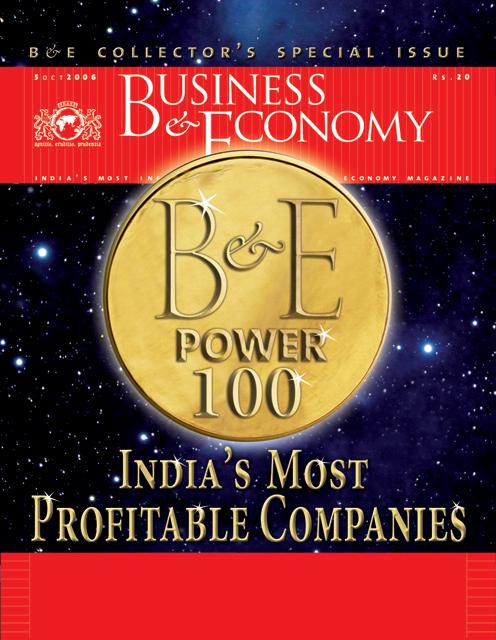
It’s wonderful that you published a list of top 100 Indian companies (B&E Cover Feature, issue dated October 5, 2006) on the basis of strong, comparable and valid financial parameters like Market Capitalisation (which is normally considered by all the agencies who rank India Inc. every year), Profit After Tax to Sales ratio and Dividend- Yield. However, it would have been great if you could have considered other major parameters like the asset base separately and growth performances over the years, etc. Also it would have been great if valuation techniques would have been used to rank even unlisted entities as many of them are already market leaders even in the major Indian cities with huge market shares. Hence we have slightly distorted the real image here.

Piyush Lahiri
Mumbai (Maharashtra)

For Complete IIPM Article, Click on IIPM Article

Source :
IIPM Editorial, 2006, Arindam Chaudhuri's Initiative

For More IIPM Article, Visit Below....
IIPM Students Life > Campus Placement
IIPM Links
IIPM Students Life > Campus Resources
News At Work (continued alongside) : IIPM
IIPM Academics : Global Outreach Program
IIPM Rankings
IIPM Alliances
IIPM Academics > Faculty

Tuesday, October 17, 2006

Salubriously ‘Effervescent’

IIPM BEST MBA INSTITUTE
Investment in R&D, as well as the development of new drug molecules, has not been a paramount directive for the industry. Generics have formed the backbone, and the country has excelled at that, leaving patented original developments outside its purview. Providing cheaper and good quality derivatives to the masses in India and other third world countries, today there are about 20,000 registered manufacturers across the country manufacturing medicines worth $300 billion. Liberalisation of the economy has further helped the industry, as now duties on expensive imported equipment vital for manufacturing have come down considerably. The country is home to corporations like Ranbaxy, Cipla, Wockhardt and Dr. Reddy’s Labs, which have established themselves as trusted multinationals with operations spreading magnanimously to the European & American continents.

For Complete IIPM Article, Click on IIPM Article

Source : IIPM Editorial, 2006, Arindam Chaudhuri's Initiative

For More IIPM Article, Visit Below....
IIPM MANAGEMENT INSTITUTE
News At Work (continued alongside) : IIPM
IIPM : WHAT’S SECURITISATION?
IIPM Students Life > Campus Placement
IIPM Academics : Global Outreach Program
IIPM Students Life > Campus Resources
IIPM Alliances
IIPM Rankings

Thursday, October 12, 2006

B&E this fortnight

IIPM PUBLICATION

HP Chairwoman’s Dunn by pretexting!
She is often referred to as being charismatic and an expert at whatever she does. She pursued a course in journalism at the University of California working along side as a part-time reporter. Her skill for handling people got her recognised and eventually paved way for her successive promotions at Wells Fargo Investment Advisers. Plagued by breast cancer, she stepped down as the CEO of Barclays Global Investors. Yes, we are talking about none other than Patricia Dunn, who came to be associated with HP in 1998 as a board member and soon rose to the post of the Executive Chairman. But January 2007 will see Dunn stepping out, only to be succeeded by the current CEO Mark Hurd. This down turn in her career comes in the wake of a scandal where the board members were spied on to find out who was responsible for disclosing information from board meetings to the press. And all this is known to have taken place with Dunn’s approval. It was revealed that, a firm hired by HP resorted to pretexting (lying about one’s identity) to get their hands on the personal phone records of nine journalists, directors and employees of HP. Pretexting is actually unlawful in California. There are also chances that Dunn may be tried by the law.

For Complete IIPM Article, Click on IIPM Article

Source : IIPM Editorial, 2006, Arindam Chaudhuri's Initiative

For More IIPM Article, Visit Below....
IIPM MANAGEMENT INSTITUTE
A few Bollywood directors on TVC’s
News At Work (continued alongside) : IIPM
IIPM Students Life > Campus Placement
IIPM Academics : Global Outreach Program
IIPM Alliances IIPM : WHAT’S SECURITISATION?