Sunday, August 20, 2006

Barista on prowl for a new partner


IIPM BEST MBA INSTITUTE
Coffee chain Barista is on the look out for a strategic investor. The initiator of coffee chains in the country is now charting out aggressive expansion plans. Though the group wishes to retain management control, it is looking towards partial dilution of its equity holding. The new investor would primarily be inducted for the group’s investment purposes. At pre- sent, the coffee chain is owned by an NRI – C. Sivasankaran, who is famous for buying sick or ailing companies, then turning them around and selling off for a huge profit. So, it would not be a surprise to see that the supposed strategic investor turns out to be the new owner too.

For More IIPM Article, Click on IIPM Article

Source : IIPM Editorial, 2006, Editor - Prof. Arindam Chaudhuri

For more IIPM info, Visit below.....
http://www-management-courses.ebloggy.com/
http://iipm-institute.21publish.com/
http://iipm-institute.21publish.com/vidhhyalaya
http://iipm-b-school.blog.ca/
http://sonuright.bravehost.com
http://www.freewebs.com/iipm-institute/index.htm
http://www.journalscape.com/iipm/
http://iipminstitute.blogonfly.com
http://sonu-site.supersized.org
http://surendersingh.bloggoing.com/
http://sonusingh.alfablog.com/
http://www.journalhome.com/iipmblog
http://aboutiipm.egoweblog.com/

Friday, August 11, 2006

The Election Commission & Supreme Court passed verdicts to keep criminals


IIPM MANAGEMENT INSTITUTE
Of crying shame is the fact that when in 2002, the Election Commission & Supreme Court passed verdicts to keep criminals from contesting elections, MPs went to town about how these orders would murder democracy; and in 24 hours, members of the August Rajya Sabha & Lok Sabha gathered and passed a bill that changed the law to suit them. Truly speaking, fifty-five bills is a vast agenda that ought to shame at least senior politicians into exhibiting work ethics. Prime Minister Manmohan Singh & Congress President Sonia Gandhi are credited with an inner voice. It shouldn’t be too difficult for them to summon moral fibre. Maybe then, their MPs will do what they should: Make laws for all of us... and yes, pass those bills!

Some pending bills
  • The Electricity (Amendment) Bill, 2005
  • The Scheduled Tribes (Recognition of Forest Rights) Bill, 2005
  • The Juvenile Justice (Care and Protection of Children) Bill, 2005
  • The Food Safety and Standards Bill, 2005
  • The Pension Fund Regulatory and Development Authority Bill, 2005
  • The Wildlife (Protection) Amendment Bill, 2005
  • The Protection of Human Rights (Amendment) Bill, 2005
  • The Prevention of Child Marriage Bill, 2004
  • The Seeds Bill, 2004
  • The National Commission for Minorities (Repeal) Bill, 2004
  • The Indian Medical Council (Amendment) Bill, 1987

    Source: Bulletins of Rajya Sabha and Lok Sabha
For More IIPM Article, Click on IIPM Article

Source : IIPM Editorial, 2006, Editor - Prof. Arindam Chaudhuri

Some IIPM Site:
http://iipm-web.blogspot.com/
http://iipm-info-iipm.blogspot.com/
http://iipm-progress-iipm.blogspot.com/
http://blogger-is-best.blogspot.com/
http://blogger-club.blogspot.com/
http://blogger-progress.blogspot.com/
http://blogger-source.blogspot.com/
http://iipmtop.blogspot.com/
http://iipm-best-b-school.blogspot.com/
http://industryiipm.blogspot.com/
http://www.sonulatwal.9k.com
http://sonuright.mbablogs.businessweek.com/

Wednesday, July 26, 2006

REMINISCING THE PAST

IIPM PUBLICATION
Located in the heart of Southeast Asia, Malaysia enthralls its visitors with breathtaking natural beauty, rich cultural heritage and exotic culinary delights. Major tourist attractions are Kuala Lumpur (capital city), Penang, Sabah and Melaca. Malaysia happens to be an amalgamation of various cultures around the world; the population largely consisting of Malays, Indians and Chinese. The country witnessed the beginning of its colonial legacy in 1511, when the Portuguese first arrived in Malaysia. They were followed by the Dutch, British and Japanese.

By the beginning of World War II, the economy came under the Japanese control, which ended in 1945 only, when the war ended. The country got freedom from British colonial rule in 1957 and the Federation of Malaya was established under the leadership of Tunku Abdul Rahman. Since then, Malaysia has focused on transforming itself from being an essentially agricultural & mining society to one relying on manufacturing. Singapore was initially a part of Malaysia, but withdrew in 1965 due to demographic imbalances. Ever since, Malaysia’s presence has been felt significantly through various international frameworks like AFTA (ASEAN Free Trade Area), APEC (Asia- Pacific Economic cooperation), NAM (Non-Aligned Movement Countries) and OIC (Organisation of Islamic Countries).

Since the opening of the economy in 1980s, Malaysia achieved stupendous growth and prosperity. Much of the credit is due to the dynamic leadership of the Prime Minister Mahathir bin Mohammed, who led the country from 1981 to 2003.

For More IIPM Article, Click on IIPM Article

Source : IIPM Editorial, 2006, Editor - Prof. Arindam Chaudhuri

Some IIPM Site:
Akbar ! Umesh Karnatak ! Bhupender Singh ! Kirti Singh ! Gopal Singh ! O.P.Sharma ! Tulsi ! Lokeshwar ! John Isabella ! Ajit Kumar ! Rachit Babbar ! Danish Kaneria ! Chandra Pal ! Ramnaresh Sarvan !

Wednesday, July 05, 2006

INFOSYS

IIPM PUBLICATIONS

INFOSYS


Have you heard of an Indian company being given the credit for bringing jobs back to the US soil? Undoubtedly, it can be none other than India’s homegrown IT giant, Infosys, which proved the outsourcing perception to be misplaced through its unique off shore outsourcing strategy! In the ‘People’s Awards for Excellence in Business & Economy’, Infosys was appropriately crowned as India’s most global company. The times have changed and Infosys faces new challenges. Nevertheless the company continues to make its mark in the international arena by taking on the likes of IBM, EDS, KPMG and Accenture, to name a few.

For Complete IIPM Article, Click here

Source : IIPM Editorial, 2006, Author - Prof. Arindam Chaudhuri

For More IIPM Info, Visit below...
About IIPM ! IIPM Programmes ! IIPM Placement ! IIPM Alumni !


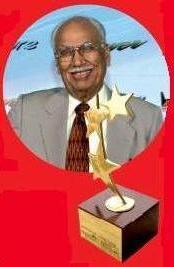
Brij Mohan Munjal started out with a small business of manufacturing bicycle components in Ludhiana. After masterminding one of the most successful JVs in the world – Hero Honda, Munjal maneuvered the Indian two wheeler industry in a new direction and brought an end to Bajaj’s decade’s long dominance. Today, Hero Honda Motors Ltd. is the world’s largest two wheeler company. Munjal’s business acumen and leadership qualities have paved the way for the Group’s success. Munjal’s strategy of backward integration of the group’s operations has been immensely beneficial to the Group. Today, the value of the Hero Group is $2.2 billion. Even after tasting success, Munjal believes in leading a simple life and prefers to stay away from the media. This self-made entrepreneur was born in 1923. At the age of 82, Brij Mohan Munjal continues to take active participation in the company’s affairs and is an honorary fellow of the Indian Institue of Industrial Engineers. Also, he has been involved in promotion of the Indian industry and has served as the president of SIAM and CII among other things.

For Complete IIPM Article, Click here

Source : IIPM Editorial, 2006, Editor - Prof. Arindam Chaudhuri

For More IIPM Info, Visit below...
IIPM Alliances ! IIPM Ranking ! IIPM Director's Desk ! IIPM Dean's Message !